Introduction
Shopify Theme selection isn’t a design decision; it’s a delivery website infrastructure decision.
For agencies offering Shopify web design and ecommerce solutions, the wrong theme quietly adds 20–40 unplanned hours to every build. That time doesn’t just delay launch, it erodes margins, creates scope creep, and limits how many projects your team can deliver each month.
High-performing agencies don’t choose Shopify eCommerce themes project by project. They standardize the best Shopify Store themes by niche to reduce build time, control performance, and scale delivery without adding headcount or sacrificing quality.
When the right Shopify theme for eCommerce is used consistently, build timelines shrink by up to 50%, QA cycles become predictable, profit per project increases, and client expectations are easier to manage.
TL;DR
- Shopify theme selection directly impacts delivery speed, profit margins, and client retention
- The best Free Shopify themes cover ~70% of agency projects when standardized correctly
- Premium Shopify themes are justified for luxury, editorial, or feature-heavy builds where higher deal values offset cost
- Agencies that standardize 3–5 themes per niche reduce build time by 30–50% and increase delivery capacity without hiring
- Online Store 2.0 themes outperform legacy themes in speed, flexibility, and long-term maintainability
- Fast Shopify Themes rank better in Google, LLMs search due to stronger Core Web Vitals scores, improving client results and retention
Written For:
Agency founders, CEOs, CMOs, and heads of delivery are responsible for scaling Shopify development services profitably.
What is Shopify theme standardization for agencies?
Shopify theme standardization is the practice of limiting theme selection to a vetted set of Shopify themes by niche in order to reduce build time, control performance, protect margins, and scale Shopify delivery without adding Shopify development headcount.
Agency leaders: Email this article to your operations or development team.

Before E2M, I spent most of my time fixing problems — poor communication, inconsistent quality. After switching, everything changed. We use E2M for web design, development, and SEO, and my team jokes they’re our best employee because they’re that consistent and reliable. Now I have time to actually grow the business.

We came to E2M because creative was flying, but development was falling behind. Now they’re just part of our team, working in our project management software, communicating daily, handling what we can’t. We can’t go out and hire a full team of WordPress and web specialists.

Why Shopify Theme Selection Matters More Than Agencies Think
The Hidden Cost of Poor Theme Choice
A misaligned Shopify ecommerce template doesn’t fail loudly. It fails financially, in ways that compound across projects. Your theme choice directly determines build time (15–60 delivery hours), performance (Core Web Vitals influencing Shopify SEO), maintenance burden, client experience, and margin protection.
The Reality Agencies Don’t Track Closely Enough
Digital Agencies that standardize Shopify theme selection by niche consistently reduce average build time by 30–50%. More importantly, they eliminate costly mid-project theme switches that derail timelines, inflate costs, and damage client trust.
Standardization turns theme selection into:
- A predictable delivery input
- A controllable cost variable
- A repeatable system—not a one-off decision
Agency Takeaway
Treat Shopify theme selection as a strategic infrastructure decision, not a client preference or a designer’s creative choice. The right theme strategy protects margins, accelerates delivery, and creates the operational leverage agencies need to scale without hiring pressure.
Free vs. Premium Shopify Themes: How Agencies Decide
Best Free Shopify Themes: The Default for Scalable Delivery
Shopify’s official free themes are built and maintained by the Shopify core team. The fastest Shopify themes available are free, Dawn leads on performance, Refresh on modern UX, Sense for beauty and wellness, Studio for editorial brands, and Craft for product-forward design.
For most agencies, free themes should be the default starting point, not a fallback. Zero licensing cost, Shopify-supported updates, and strong Core Web Vitals make them the highest-margin option.
Premium Shopify Themes: Strategic Upgrades
Premium Shopify themes from the Shopify Theme Store ($100–$500) introduce advanced layouts and niche-specific functionality. Agency-approved picks include Prestige (luxury), Impulse (promotion-driven), Be Yours (beauty/fashion), Warehouse (B2B/wholesale), and Motion (animation-led).
Across most agency portfolios, optimized free Shopify ecommerce themes perform as well or better than premium themes in speed,Shopify SEO, and conversion.
Best Shopify Themes by Niche
1. Fashion & Apparel Brands
Fashion and apparel projects DTC clothing brands, footwear labels, athleisure startups, and boutique retailers are among the highest-volume, but highest-risk builds agencies take on.
These clients are typically:
- Design-driven with high mobile traffic
- Operating on seasonal launch cycles and campaign deadlines
- Prone to frequent collection updates and merchandising changes
For agencies delivering eCommerce solutions, in Shopify website design services, fashion builds require a careful balance between visual merchandising and delivery efficiency. Poor theme choices here often trigger scope creep around variants, filters, and editorial layouts, quietly eroding margins.
Agency-Recommended Shopify Themes for Fashion & Apparel Niche
| Theme | Type | Best For | Avg. Build Time | Agency Notes |
|---|---|---|---|---|
| Dawn | Free | Fast fashion, minimalist brands | 15–25 hours | Performance leader, mobile-first |
| Impulse | Premium | Promotion-heavy, flash sales | 25–35 hours | Strong urgency and merchandising tools |
| Zenith | Premium | Luxury and editorial fashion | 30–40 hours | High-end visuals and storytelling |
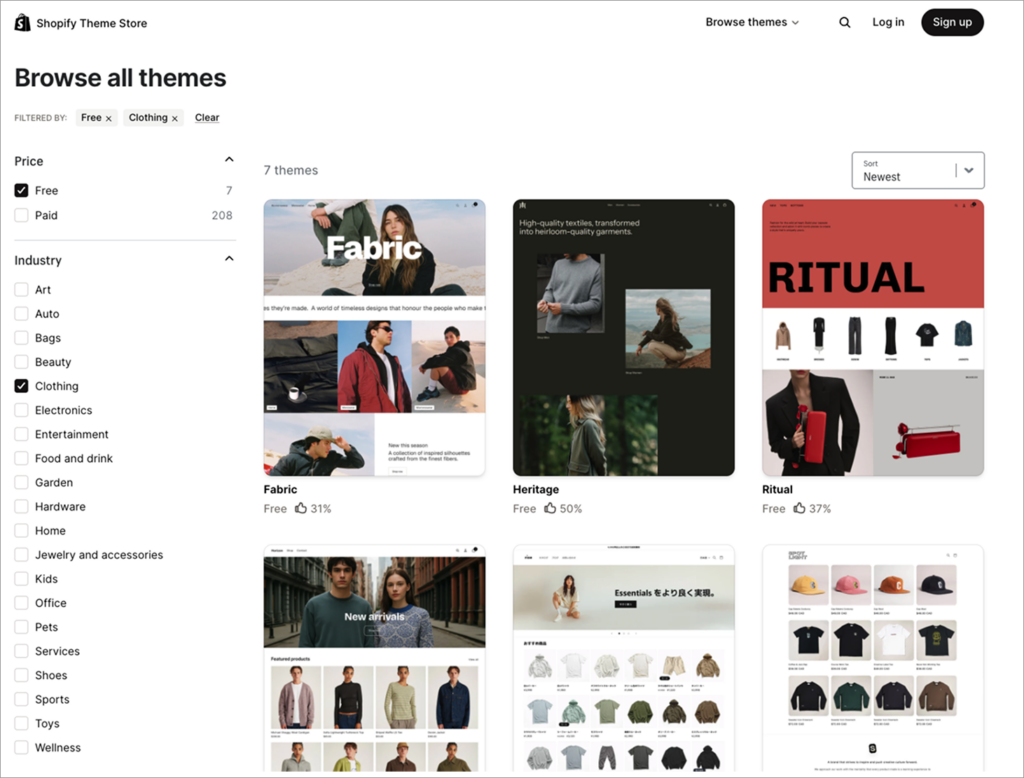
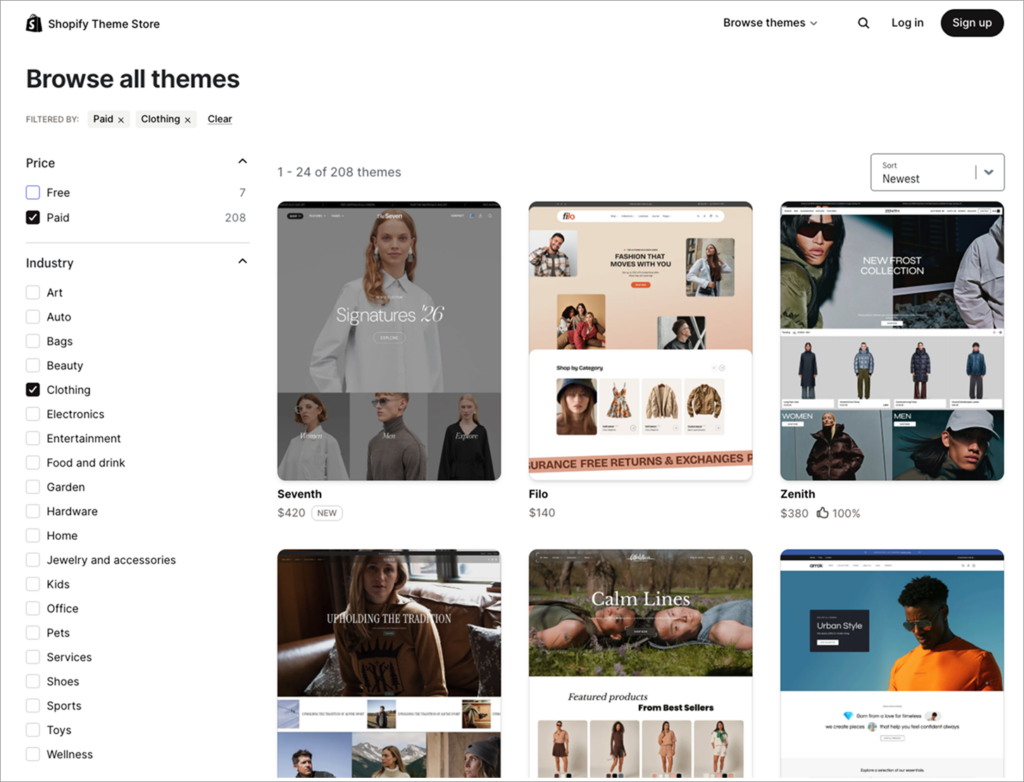
Agencies that standardize on one free and one premium fashion theme can support a wide range of clients while keeping delivery predictable.
2. Beauty, Skincare & Personal Care
Beauty, skincare, grooming, and wellness brands are high-conversion but trust-sensitive clients. These projects require strong product education, compliance signalling, and brand storytelling, without any tolerance for slow performance or cluttered user experiences.
For agencies delivering Shopify development services, the challenge is building credibility and clarity at scale without inflating build complexity, timelines, or margins. This is where agency partners like E2M Solutions support Shopify agencies through white label Shopify development, deliver consistent builds, predictable timelines, and margin-safe execution.
What Matters Most for Agency Delivery
Beauty and personal care projects consistently require:
- Brand storytelling: Ingredient transparency, certifications, and mission-driven messaging
- Trust signals: Icons, badges, and claims that are easy to update without code changes
- Intuitive navigation: Customers browse by concern, ingredient, or outcome—not just category
- Clean aesthetics: Minimal, modern layouts that keep focus on products
- Enhanced search: Ingredient-, concern-, and skin-type–based discovery
Themes that support metafields and advanced search natively reduce customization hours and post-launch revisions.
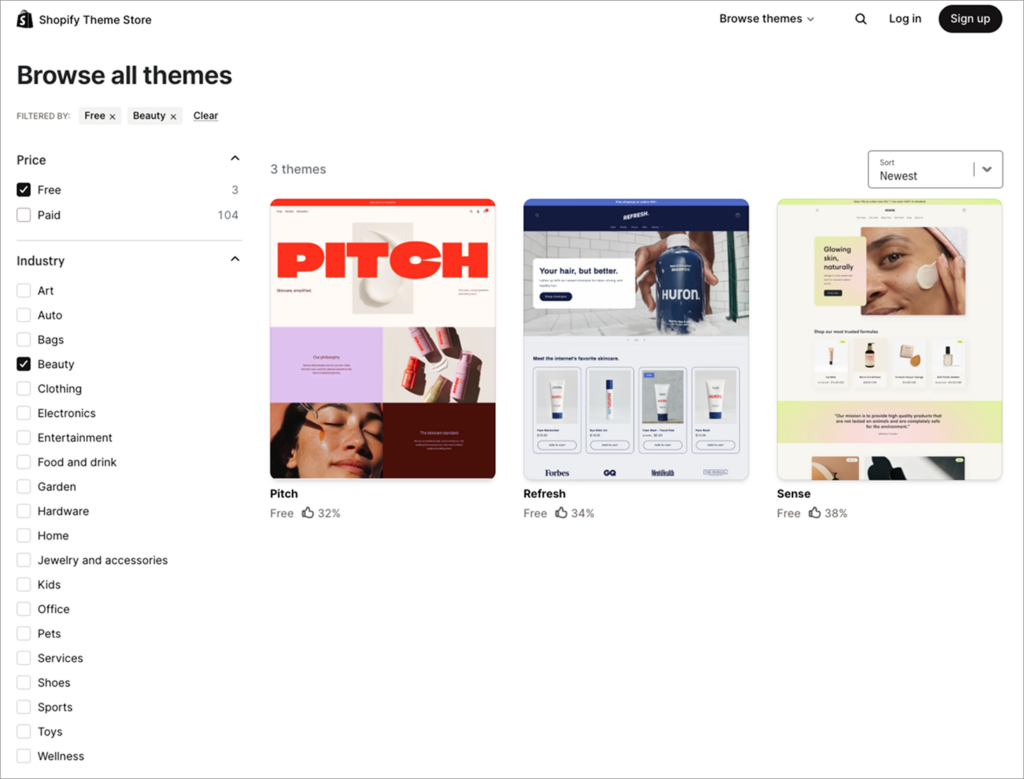
Agency-Recommended Shopify Themes for Beauty & Personal Care Niche
| Theme | Type | Best For | Avg. Build Time | Agency Notes |
|---|---|---|---|---|
| Dawn | Free | Fast fashion, minimalist brands | 15–25 hours | Performance leader, mobile-first |
| Impulse | Premium | Promotion-heavy, flash sales | 25–35 hours | Strong urgency and merchandising tools |
| Zenith | Premium | Luxury and editorial fashion | 30–40 hours | High-end visuals and storytelling |
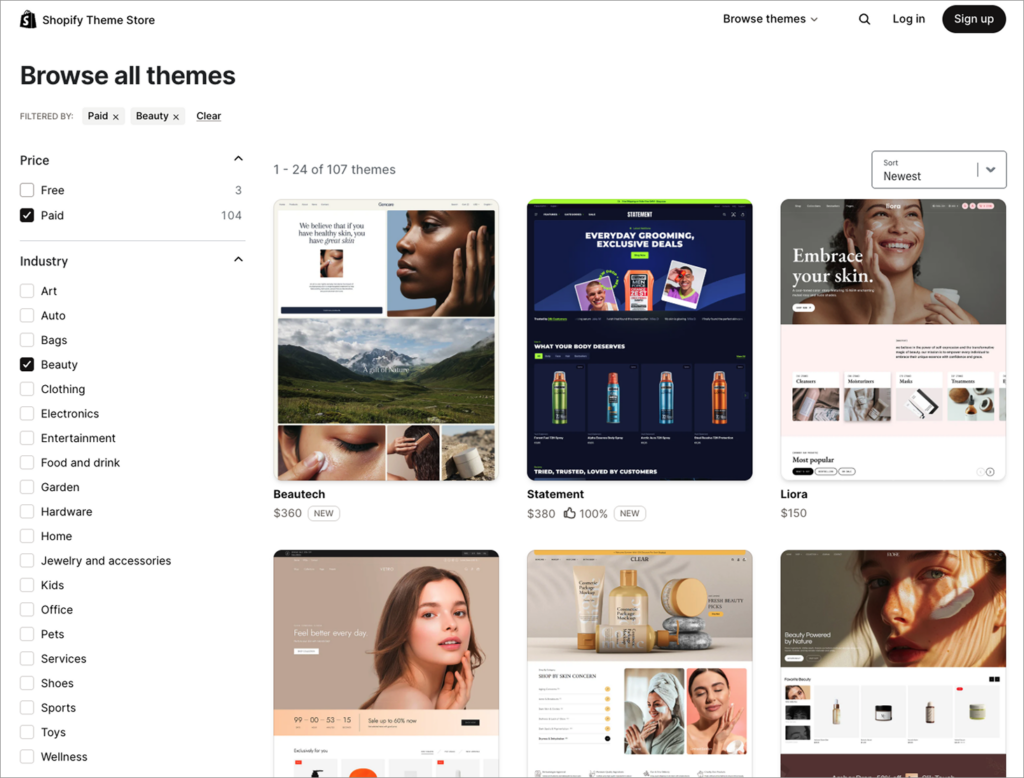
Agency recommendation:
Refresh handles 70% of beauty builds. Sense works well for ingredient-focused brands. Be Yours for luxury skincare with budgets of $20K+.
Conversion & Delivery Tip:
Beauty brands convert best when customers can filter by ingredient, concern, or skin type. Ensure your selected theme supports:
- Custom metafields for ingredients and claims
- Enhanced search without heavy third-party apps
This approach improves conversion while keeping delivery timelines predictable.
Ready to evaluate fit?
Talk to our Shopify delivery team.
 Book a Growth Call
 3. Health, Wellness & Supplements
Health, wellness, and supplement brands, including nutraceuticals, fitness supplements, vitamins, and functional wellness products, operate in one of the most scrutinized ecommerce categories.
These clients face:
- Higher expectations around performance and credibility
- Greater sensitivity to page speed and stability
- Ongoing pressure to communicate trust, safety, and transparency
For agencies building on Shopify, delivery risk is higher here than in most verticals, making theme selection a strategic safeguard, not a creative decision.
What Matters Most for Agency Delivery
Health and supplement projects consistently demand:
- High performance: Search visibility is closely tied to page speed and stability
- Trust-first layouts: Clean design that prioritizes clarity over visual flair
- Subscription readiness: Support for recurring orders and promotional mechanics
- Payment API compatibility: Work with Shopify Payments, alternative gateways, or checkout extensions.
- Educational content support: Long-form product education without layout or performance degradation
Themes that handle these requirements natively reduce compliance risk, revision cycles, and post-launch fixes.
Agency-Recommended Shopify Themes for Health & Wellness Niche
| Theme | Type | Best For | Avg. Build Time | Agency Notes |
|---|---|---|---|---|
| Dawn | Free | Fast fashion, minimalist brands | 15–25 hours | Performance leader, mobile-first |
| Impulse | Premium | Promotion-heavy, flash sales | 25–35 hours | Strong urgency and merchandising tools |
| Zenith | Premium | Luxury and editorial fashion | 30–40 hours | High-end visuals and storytelling |
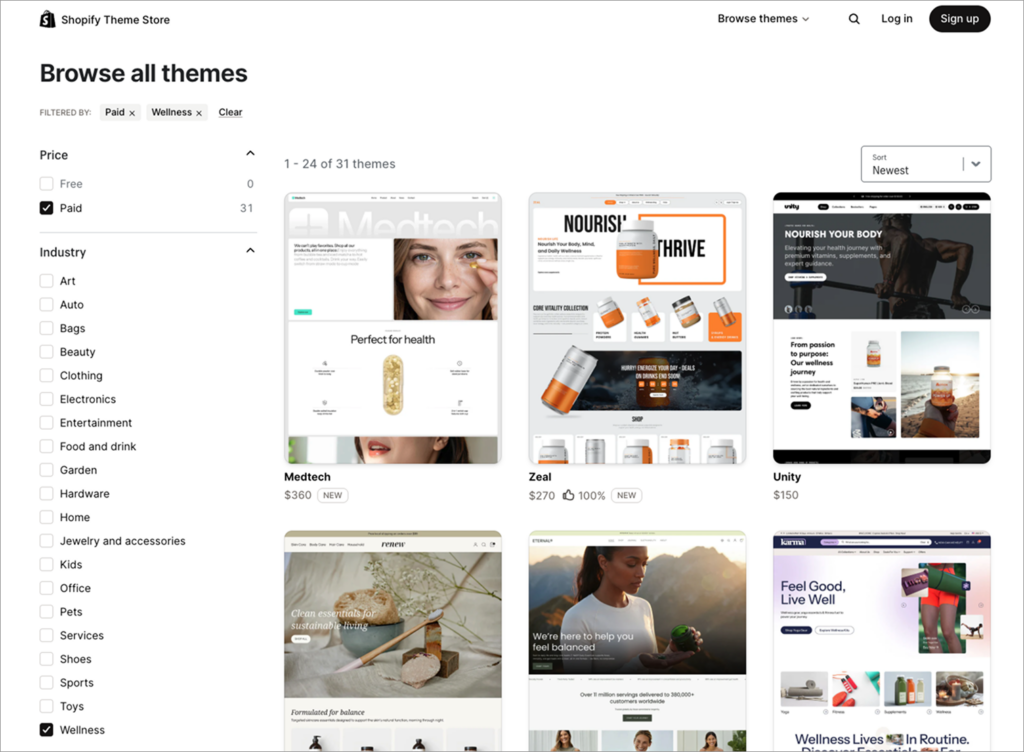
SEO Note:
Health sites face strict E-E-A-T requirements & YMYL Content, custom Shopify theme development here should prioritize schema markup, author credentials, and citation-backed descriptions.
4. Direct-to-Consumer (DTC) General Brands
DTC projects are volume-driven. Home goods, lifestyle products, and emerging consumer brands. This is where finding the right Shopify developer internally or through a White-label Shopify agency prioritizes speed, flexibility, and iteration over long-term complexity.
These clients typically:
- Launch fast and evolve brand positioning post-launch
- Test products, pricing, and messaging frequently
- Expect rapid updates without ongoing development costs
For agencies building on Shopify, DTC projects are volume-driven. Profitability depends on launch velocity and standardization, not bespoke design.
Take E2M’s free 60-second diagnostic to find out whether the rest of your Agency delivery model — capacity, margins, and execution is keeping up with your growth.
What Matters Most for Agency Delivery
DTC consistently requires:
- Flexible design systems: Brands change positioning quickly
- Rapid launch capability: Speed to market is often the primary KPI
- CRO-focused UX: Conversion-ready layouts without heavy customization
- Modular sections: Easy updates by non-technical teams post-launch
Themes that support these needs natively allow agencies to launch faster, iterate cheaply, and move on to the next project.
Agency-Recommended Shopify Themes for Health & Wellness Niche
| Theme | Type | Best For | Avg. Build Time | Agency Notes |
|---|---|---|---|---|
| Dawn | Free | Fast fashion, minimalist brands | 15–25 hours | Performance leader, mobile-first |
| Impulse | Premium | Promotion-heavy, flash sales | 25–35 hours | Strong urgency and merchandising tools |
| Zenith | Premium | Luxury and editorial fashion | 30–40 hours | High-end visuals and storytelling |
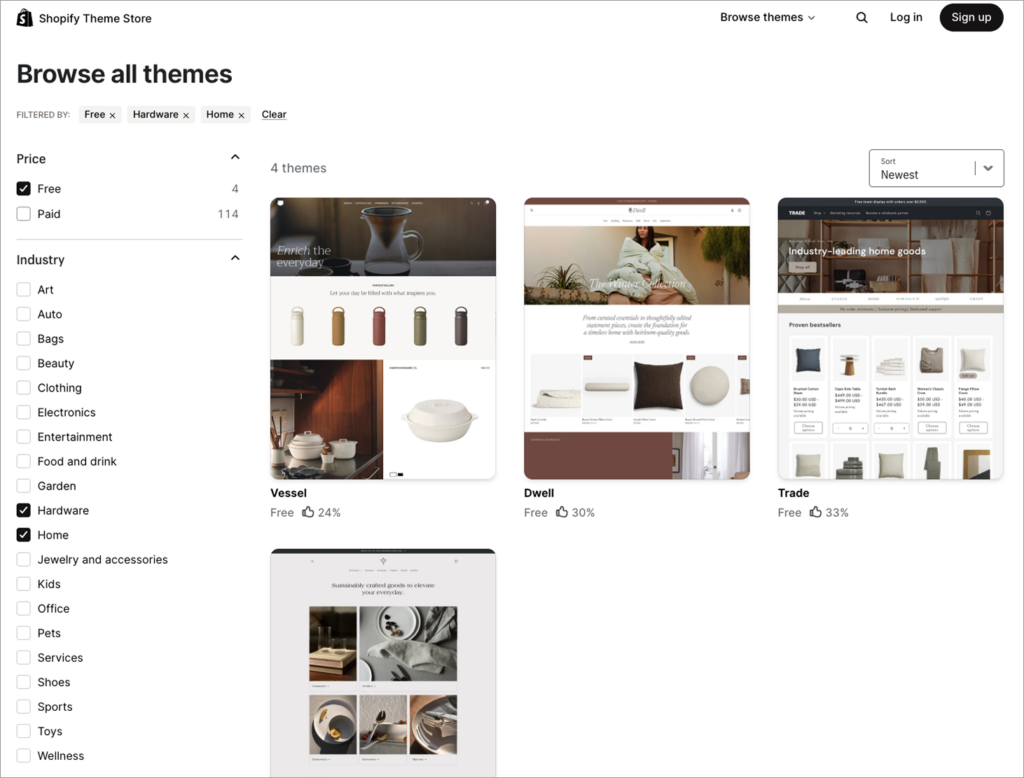
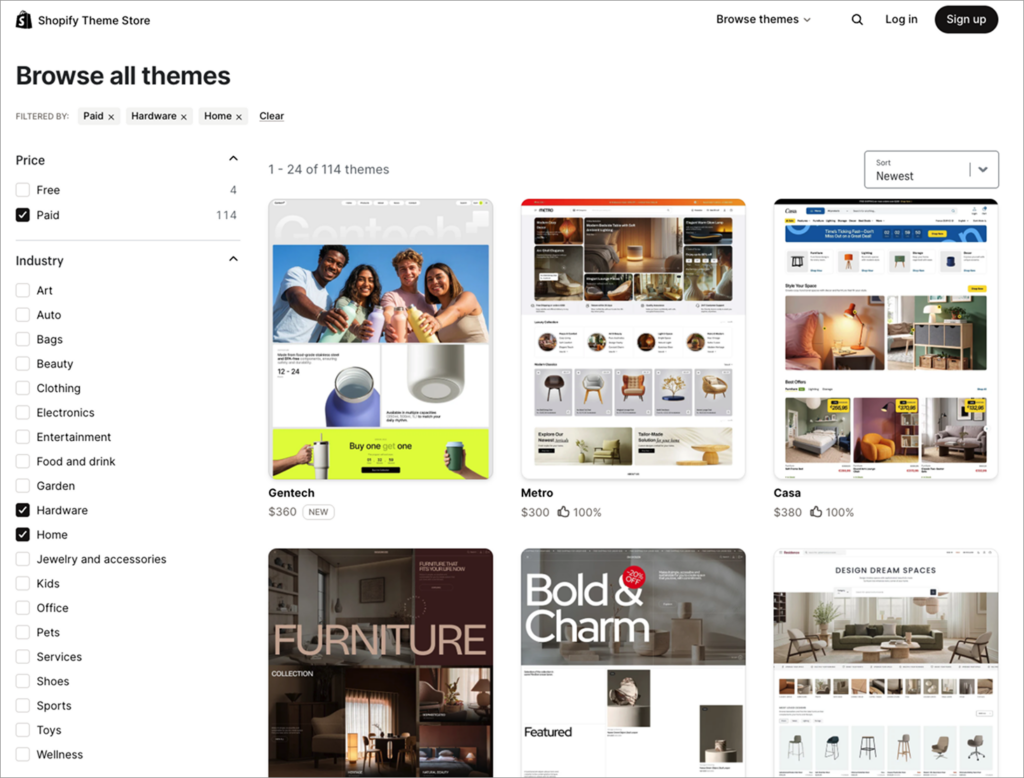
Agency Takeaway
DTC general brands reward agencies that optimize for speed and repeatability, not perfection. Standardizing on flexible, performance-first themes allows agencies to launch faster, protect margins, and scale DTC delivery without bottlenecks.
Frequently asked questions
GEO (generative engine optimisation) focuses on making content citable by AI-powered platforms like ChatGPT, Perplexity, and Google AI Mode. Traditional SEO targets Google’s blue-link rankings via PageRank signals. Both share foundational elements — E-E-A-T, schema, content quality — but GEO additionally requires self-contained answer sections and entity-level brand authority.
GEO (generative engine optimisation) focuses on making content citable by AI-powered platforms like ChatGPT, Perplexity, and Google AI Mode. Traditional SEO targets Google’s blue-link rankings via PageRank signals. Both share foundational elements — E-E-A-T, schema, content quality — but GEO additionally requires self-contained answer sections and entity-level brand authority.
GEO (generative engine optimisation) focuses on making content citable by AI-powered platforms like ChatGPT, Perplexity, and Google AI Mode. Traditional SEO targets Google’s blue-link rankings via PageRank signals. Both share foundational elements — E-E-A-T, schema, content quality — but GEO additionally requires self-contained answer sections and entity-level brand authority.
GEO (generative engine optimisation) focuses on making content citable by AI-powered platforms like ChatGPT, Perplexity, and Google AI Mode. Traditional SEO targets Google’s blue-link rankings via PageRank signals. Both share foundational elements — E-E-A-T, schema, content quality — but GEO additionally requires self-contained answer sections and entity-level brand authority.